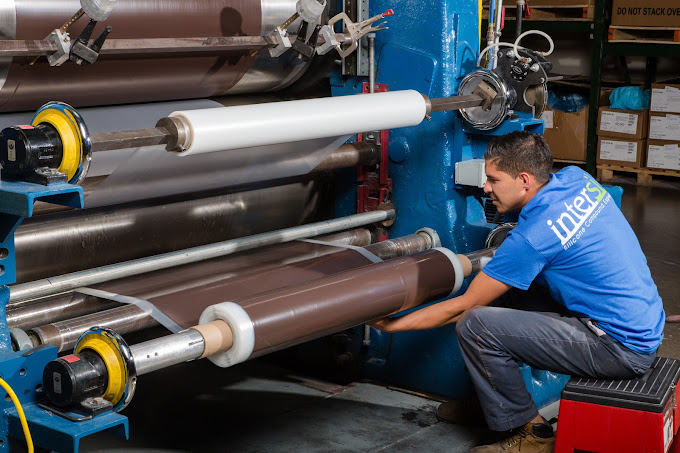
If you're sourcing silicone rubber sheet for a production run, the manufacturer you choose matters more than the spec sheet. Two suppliers can produce material to the same nominal thickness and durometer, but one delivers consistent rolls batch after batch while the...
FDA 21 CFR 177.2600 — What It Means for Silicone Sheet Buyers
Table Of Content

Contact us anytime!
If you are sourcing silicone sheet or silicone compounds for a food contact application, you have probably seen “FDA compliant” or “meets FDA 21 CFR 177.2600” on material data sheets. But what does that regulation actually require, and what should you verify before committing to a supplier?
FDA 21 CFR 177.2600 is the section of the Code of Federal Regulations that governs rubber articles intended for repeated use in contact with food. Silicone rubber falls under this regulation because it is an elastomer used in food processing equipment, sealing gaskets, conveyor belts, and other applications where the material touches food repeatedly rather than being consumed.
Here is what silicone sheet buyers need to know about FDA 21 CFR 177.2600, and how to make sure the material you are sourcing actually complies.
What FDA 21 CFR 177.2600 Requires
The regulation covers two main areas: extraction limits and permitted ingredients.
Extraction limits. The regulation sets specific limits on how much material can leach out of the rubber when it contacts food or food-simulating liquids. These are called total extractives, measured in milligrams per square inch of surface area.
For aqueous food contact, the rubber article must yield total extractives not exceeding 20 milligrams per square inch during the first 7 hours of extraction with distilled water at reflux temperature, and not exceeding 1 milligram per square inch during the succeeding 2 hours.
For fatty food contact, the limits are higher but still controlled. The rubber article must yield total extractives not exceeding 175 milligrams per square inch during the first 7 hours of extraction with n-hexane at reflux temperature, and not exceeding 4 milligrams per square inch during the succeeding 2 hours.
These limits exist because substances that migrate out of the rubber into food could pose a health risk. The regulation ensures that rubber articles do not release harmful amounts of material during normal use.
Permitted ingredients. The regulation also specifies which substances are permitted in rubber articles intended for repeated food contact. This includes the base elastomer, curing agents, fillers, plasticizers, and other additives. Not every chemical that is safe for industrial use is permitted in food contact rubber.
This is why you cannot assume that a standard industrial silicone compound meets FDA requirements, even if the silicone base polymer is inherently food safe. The additives, cure system, and processing aids all matter. A compound that works well in an automotive gasket may contain ingredients that are not permitted under FDA 21 CFR 177.2600.
Why Platinum Cured Silicone Is the Standard for FDA Compliance
The cure system affects FDA compliance in ways buyers often overlook.
Peroxide cured silicone uses organic peroxides for crosslinking. The cure process generates byproducts that remain in the material. These byproducts can contribute to higher extractable levels, which makes it harder to meet the extraction limits in FDA 21 CFR 177.2600. A post-bake process can reduce these volatiles, but it adds a manufacturing step and does not eliminate them entirely.
Platinum cured silicone uses a platinum catalyst for addition polymerization. No peroxide byproducts are generated, so the material has lower extractable content by design. This makes platinum cured silicone the standard choice for FDA compliant food contact applications. The lower extractable levels make it easier to meet the regulation limits without post-baking, and the higher purity reduces the risk of contamination.
If your application requires FDA 21 CFR 177.2600 compliance, ask your supplier whether the compound is platinum cured or peroxide cured, and request extraction test data showing that the material meets the limits for your food type (aqueous, fatty, or both).
What to Ask Your Silicone Supplier
When sourcing FDA compliant silicone sheet or compounds, ask these questions:
- Is the compound formulated specifically to meet FDA 21 CFR 177.2600, or is it a general-purpose compound that happens to use food-safe ingredients?
- Can you provide extraction test data showing the material meets the total extractives limits for both aqueous and fatty food contact?
- Is the compound platinum cured or peroxide cured? If peroxide cured, is a post-bake process required to meet extraction limits?
- Can you provide a certificate of conformance or compliance documentation for the specific compound and durometer I am sourcing, not just a general product line?
- Does the documentation cover the specific formulation (cure system, durometer, color, fillers) I am ordering, or does it reference a different grade?
A supplier who cannot answer these questions or provide compound-specific documentation may be reselling standard material with a generic “FDA compliant” label. That is a risk. If the material fails an audit or a customer verification test, the compliance claim is only as good as the documentation behind it.
FDA 21 CFR 177.2600 vs Other Food Contact Standards
FDA 21 CFR 177.2600 is the primary U.S. regulation for rubber articles in repeated food contact, but it is not the only standard you may encounter.
BfR (Bundesinstitut fur Risikobewertung) is the German federal institute for risk assessment. BfR recommendations are widely used in Europe for food contact materials, including silicone rubber. If you are supplying products to the European market, you may need BfR compliance in addition to or instead of FDA compliance. The testing requirements and permitted ingredient lists differ between the two standards.
Some buyers confuse FDA 21 CFR 177.2600 with FDA 21 CFR 177.1550, which covers ethylene-propylene copolymers. These are different regulations for different materials. Make sure your supplier is testing to the correct regulation for your silicone compound.
How InterSil Handles FDA Compliance
InterSil formulates custom silicone compounds specifically to meet FDA 21 CFR 177.2600. We use platinum cure systems for food contact applications because the lower extractable levels make compliance easier to achieve and maintain. Every FDA compliant compound we produce can be documented with a certificate of conformance that covers the specific formulation, durometer, and cure system you are sourcing.
Our compounds are produced at our Santa Fe Springs, California facility, where we have maintained 100 percent formulation ownership for over 40 years. We do not resell another manufacturer’s material.
FAQ
What is FDA 21 CFR 177.2600?
FDA 21 CFR 177.2600 is the section of the Code of Federal Regulations that governs rubber articles intended for repeated use in contact with food. It sets limits on extractable substances and specifies permitted ingredients for rubber materials, including silicone rubber, used in food contact applications.
Does FDA 21 CFR 177.2600 apply to silicone rubber?
Yes. Silicone rubber is an elastomer, and FDA 21 CFR 177.2600 applies to both natural and synthetic rubber articles intended for repeated food contact. Any silicone compound used in food processing equipment, sealing gaskets, or other repeated food contact applications should comply with this regulation.
What are the extraction limits in FDA 21 CFR 177.2600?
For aqueous food contact, total extractives must not exceed 20 milligrams per square inch during the first 7 hours and 1 milligram per square inch during the succeeding 2 hours. For fatty food contact, total extractives must not exceed 175 milligrams per square inch during the first 7 hours and 4 milligrams per square inch during the succeeding 2 hours.
Is platinum cured silicone better for FDA compliance?
Platinum cured silicone is the standard for FDA compliant food contact applications because it produces no peroxide byproducts, resulting in lower extractable levels. This makes it easier to meet the extraction limits in FDA 21 CFR 177.2600 without requiring a post-bake process.
Can I use peroxide cured silicone for food contact?
Peroxide cured silicone can be used for food contact if it meets the extraction limits in FDA 21 CFR 177.2600. However, peroxide cure generates byproducts that can increase extractable levels. A post-bake process may be required to reduce these volatiles enough to meet the regulation limits. Platinum cure is typically recommended for food contact applications.
What documentation should I request for FDA compliant silicone?
Request a certificate of conformance or compliance documentation that covers the specific compound, durometer, and cure system you are sourcing.